
Should we treat Sleep apnoea as an early lead indicator of future health risk?.
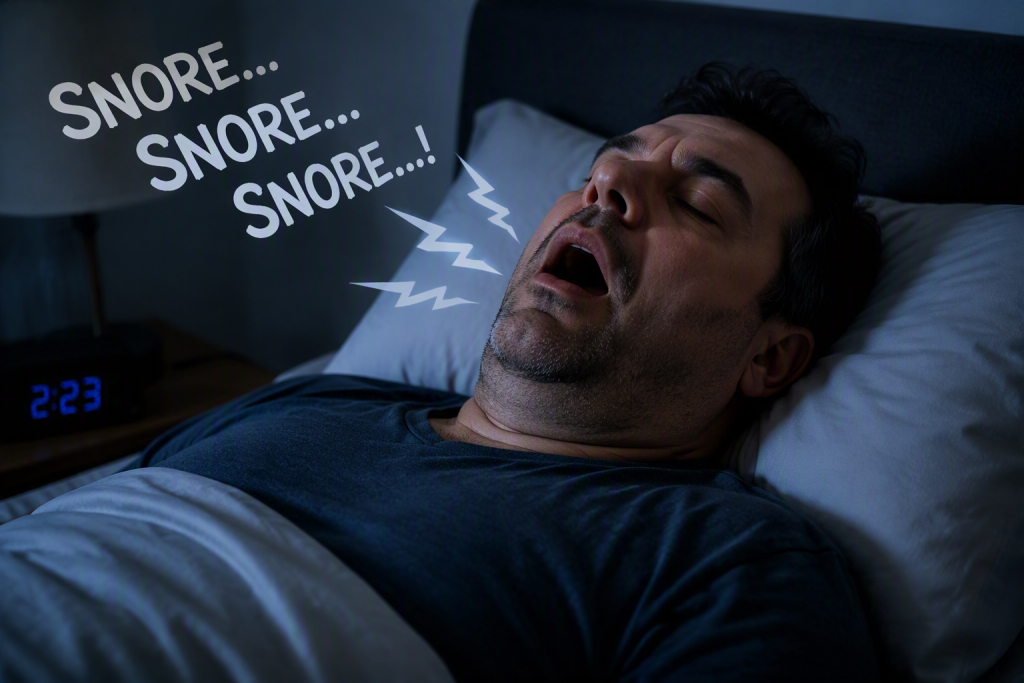
For over 2 decades healthcare professionals have relied on 5 core vital signs to assess health status: body temperature, pulse, oximetry, respiratory rate, and blood pressure. These measurements provide a snapshot of physiological function and help identify deterioration before a patient becomes critically unwell, a principle underpinning early warning tools such as the National Early Warning Score [1]. Over a decade ago, calls emerged for sleep to be recognised as the 5th Vital sign [2] .
Is now the time to recognise sleep as the 6th vital sign? . The American Heart Association also promotes sleep as one of Life’s Essential 8 for healthy living [3]. There is an important caveat here: sleep should not be viewed as merely another passive metric to record. Its true value lies in its role as a lead indicator of health, performance, and disease risk.
Why Sleep Matters More Than Ever
Sleep is not simply a period of rest. It is an active biological process essential for cardiovascular health, cerebrovascular health, metabolic regulation, immune function, cognitive performance, emotional wellbeing, and cellular repair [4].
Poor sleep has been linked to a wide range of adverse health outcomes, including hypertension and cardiovascular disease, obesity and type 2 diabetes, depression and anxiety, reduced cognitive function and memory, increased accident risk (both driving and workplace), impaired immune response, and greater all-cause mortality [5].
The Difference Between a Metric and a Lead Indicator
A metric tells us what has already happened. A lead indicator tells us what is likely to happen next.
Blood pressure can rise after years of unhealthy behaviours. HbA1c reflects glucose control over preceding months. Cholesterol reveals accumulated risk. These measurements are valuable but often identify problems after physiological changes are already underway.
Sleep, by contrast, often changes before other clinical markers deteriorate. When individuals begin sleeping poorly, we frequently see reduced physical activity, increased appetite and unhealthy food choices, elevated stress levels, reduced productivity, poorer mood regulation, worsening blood pressure control, and impaired glycaemic regulation.
Sleep as the Body’s Daily Health Check
Every night, the body effectively conducts a systems assessment. When cardiovascular, metabolic, neurological, respiratory, or psychological health becomes compromised, sleep is often one of the first functions to be affected [5].
From this perspective, sleep is less like a thermometer and more like a dashboard warning light. Ignoring it misses an opportunity for early intervention.
The Wearable Revolution
Millions of people globally regularly track sleep duration, sleep timing, sleep regularity, heart rate during sleep, respiratory patterns, oxygen saturation, and sleep stages. While these measures are not considered perfect diagnostic tools, trends often matter more than single-night values and can be indicative of an underlying possible sleep disorder [6].
A gradual decline in sleep duration, increasing night-time awakenings, or rising resting heart rate can signal emerging health issues before symptoms become obvious. This is precisely the characteristic of a lead indicator.
A Population Health Opportunity
Routine assessment of sleep could help identify people at risk of obstructive sleep apnoea, cardiometabolic disease, mental health disorders, fatigue-related workplace errors, and reduced treatment adherence [7].
The Case for Making Sleep the 5th Vital Sign
For sleep to earn its place alongside traditional vital signs, its role must extend beyond simple documentation. Recording that a patient sleeps five hours per night is no more useful than measuring blood pressure and ignoring the result.
When viewed this way, sleep becomes not another checkbox, but a catalyst for clinical action.
The Future of Healthcare Is Predictive
The future of medicine is increasingly focused on prediction, prevention, and personalised care. Sleep sits at the intersection of all three.
Unlike many health measures that reflect accumulated physiological damage, sleep offers insight into what may happen next. It provides a real-time window into resilience, recovery, vulnerability, and risk.
So should sleep be considered the 6th vital sign?
Absolutely, provided we treat it as a lead indicator rather than just a passive metric.
If we merely record sleep, we miss its potential. If we use sleep to anticipate disease, guide intervention, and promote health, it may become one of the most valuable vital signs we have.
References
1. Williams B. The National Early Warning Score: from concept to NHS implementation. Clin Med (Lond). 2022 Nov;22(6):499-505. doi: 10.7861/clinmed.2022-news-concept. PMID: 36427887; PMCID: PMC9761416.
2. Grandner MA, Malhotra A. Sleep as a vital sign: why medical practitioners need to routinely ask their patients about sleep. Sleep Health. 2015 Mar;1(1):11-12. doi: 10.1016/j.sleh.2014.12.011. PMID: 27840846; PMCID: PMC5102393.
3. https://www.heart.org/en/healthy-living/healthy-lifestyle/sleep
4. Freiberg AS. Why We Sleep: A Hypothesis for an Ultimate or Evolutionary Origin for Sleep and Other Physiological Rhythms. J Circadian Rhythms. 2020 Mar 30;18:2. doi: 10.5334/jcr.189. PMID: 32269596; PMCID: PMC7120898.
5. Shah AS, Pant MR, Bommasamudram T, Nayak KR, Roberts SSH, Gallagher C, Vaishali K, Edwards BJ, Tod D, Davis F, Pullinger SA. Effects of Sleep Deprivation on Physical and Mental Health Outcomes: An Umbrella Review. Am J Lifestyle Med. 2025 May 27:15598276251346752. doi: 10.1177/15598276251346752. Epub ahead of print. PMID: 40443808; PMCID: PMC12116485.
6. Zheng NS, Annis J, Master H, Han L, Gleichauf K, Ching JH, Nasser M, Coleman P, Desine S, Ruderfer DM, Hernandez J, Schneider LD, Brittain EL. Sleep patterns and risk of chronic disease as measured by long-term monitoring with commercial wearable devices in the All of Us Research Program. Nat Med. 2024 Sep;30(9):2648-2656. doi: 10.1038/s41591-024-03155-8. Epub 2024 Jul 19. PMID: 39030265; PMCID: PMC11405268.
7. Way JAH, Ucak S, Martinez CA, Sutherland K, Cook KM, Cistulli PA, Bin YS. Monitoring the sleep health of adults: a scoping review of routine national surveillance systems. SLEEP Advances. 2024;5(1):zpae062. doi: 10.1093/sleepadvances/zpae062.